
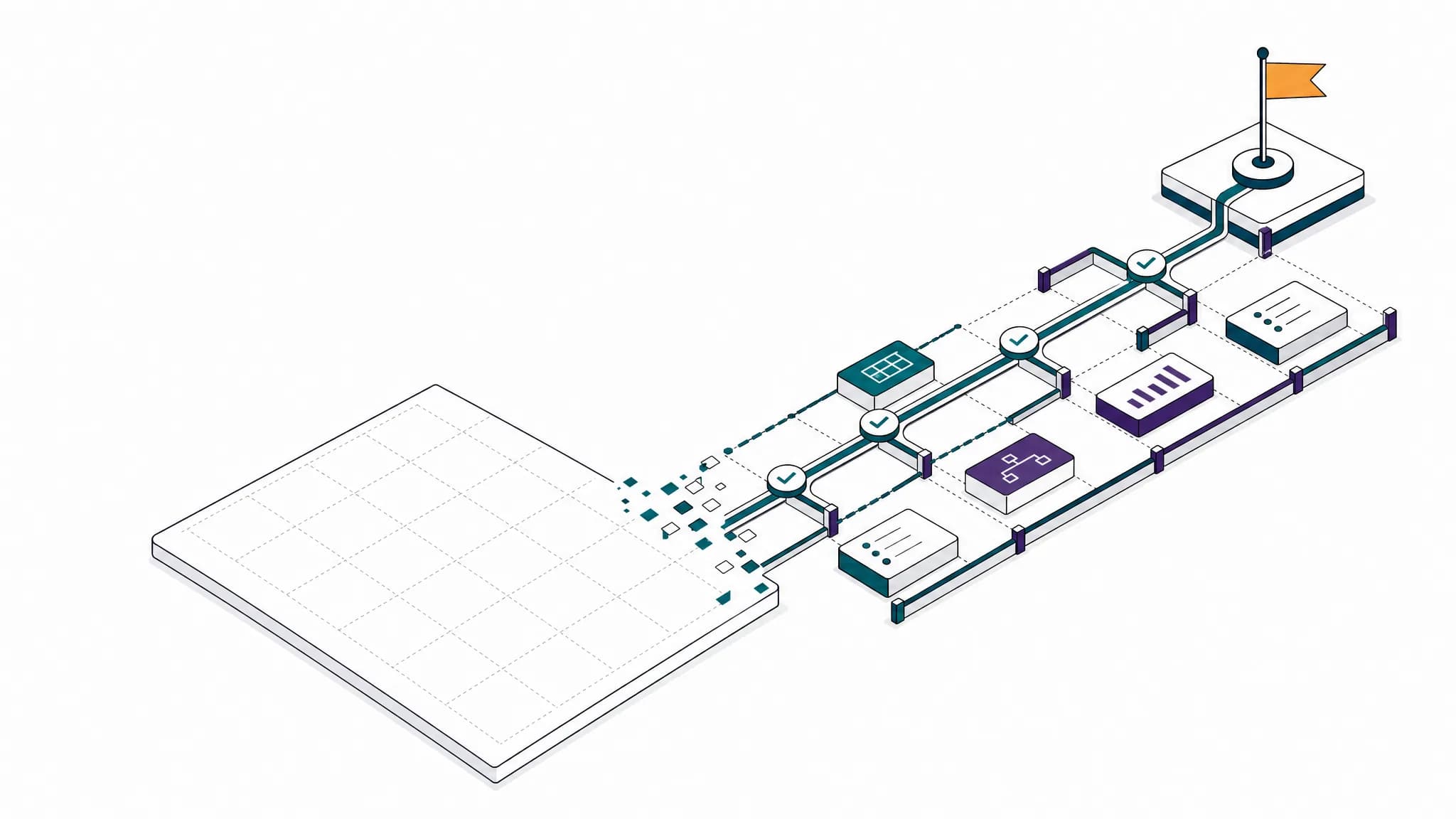
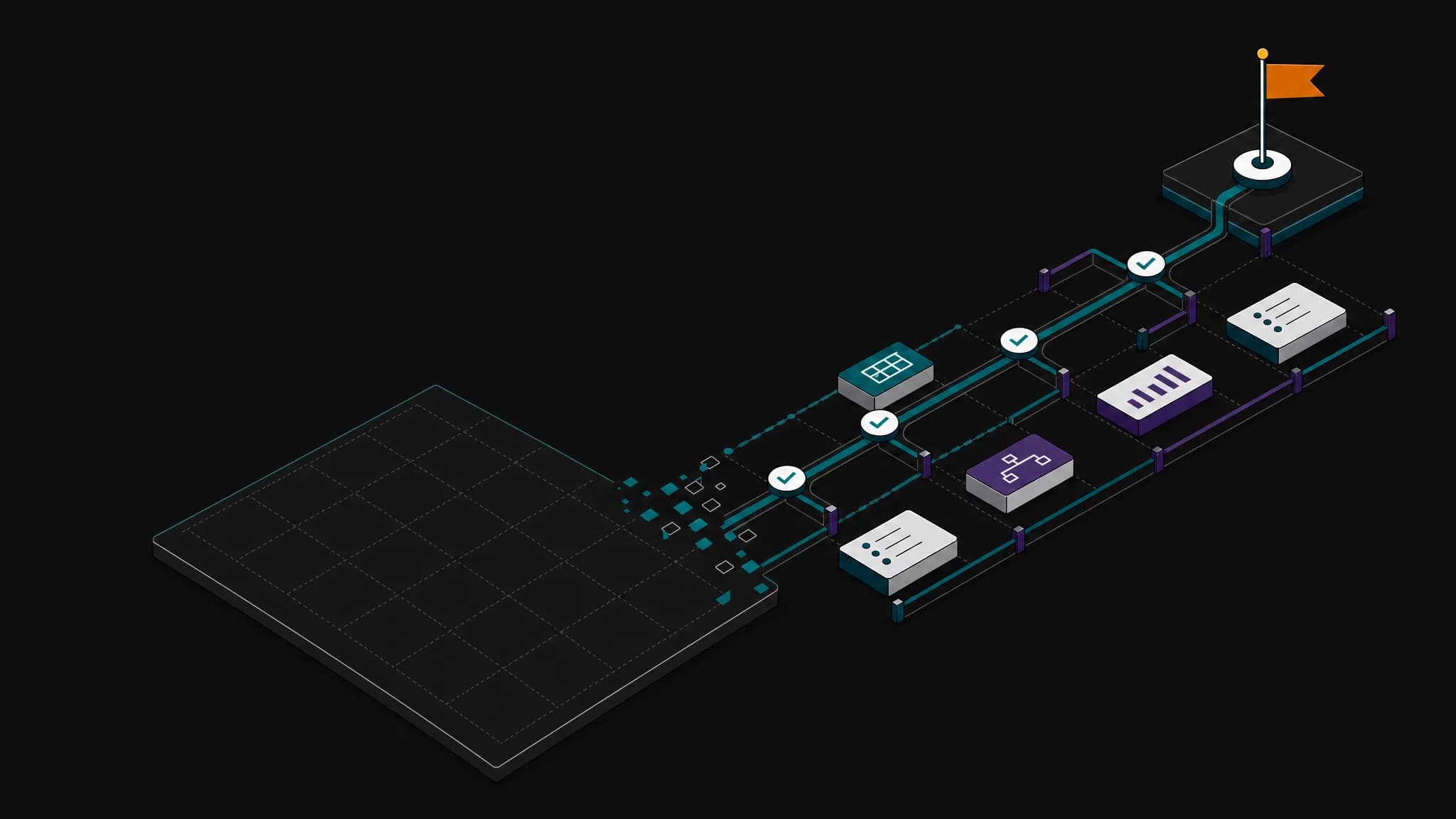
The Blank Canvas Trap: Why Infinite Flexibility Kills Your Project

The cursor blinks. The page is white. And empty.
You just opened your new project management tool. It promises "infinite flexibility." You can build anything! A kanban board, a list, a timeline, a database...
But right now, you have nothing.
Instead of planning your project, you start building the system to plan your project. Three hours later, you have a beautiful dashboard, color-coded tags, and a complex folder structure. And you haven't defined a single real goal.
The Paralysis of Choice
This is the "Blank Canvas Trap." Tools like Notion or massive Excel sheets sell us freedom, but often deliver paralysis. They assume you already know exactly how to structure your work.
But usually, we don't. We have a vague idea. A "gut feeling." And dumping that gut feeling into a blank table doesn't make it a plan. It just makes it a table.
Without a clear structure from day one, two things happen:
- Ambiguity creeps in: "Update website" sounds like a task, but it's a project. Without structure, it sits on your to-do list for months.
- AI remains dumb: If your project is just a pile of loose notes, no AI can help you. It can summarize text, but it can't warn you about risks.
Templates Are Not the Answer
"Just use a template!" they say. So you download the "Ultimate Startup OS" template. It has 50 columns you don't need, and lacks the 2 you do need. You spend the next day fighting the template instead of fighting your project's challenges.
Templates are static. Your project is unique.
Don't Configure the Tool. Clarify the Project.
This is where we flipped the script with TensorPM. We realized: You don't want to design a database. You want to start. That is why there is no single mandatory starting path. You can describe the idea, add documents or images, combine both, use a guided setup, or deliberately begin with an empty project.
When you choose AI assistance, TensorPM acts like an experienced partner sitting across the table. It starts with the questions that give the project structure:
- "What are we building today?"
- "Who is this for?"
- "What keeps you up at night regarding this project?"
You do not need to complete long forms. You describe the project and then review the structured draft. AI extracts measurable goals, identifies risks, and proposes a project structure. You remain the authority over what becomes confirmed project context.
Why does it ask these questions? Because even in 2026, the pillars of project success haven't changed:
- Vision: Knowing where you are going.
- Requirements: Knowing what to build.
- Risks: Knowing what could kill your project.
The AI ensures you cover these bases—not by forcing you to fill out a 50-page document, but by gently guiding your conversation there. It brings the structure of a professional PM without the boring overhead.
Structure is Freedom
The result isn't a rigid bureaucracy. It's a safety net.
When you start with a structure that understands your intent, you stop worrying about how to organize tasks and start actually doing them. You gain the freedom to focus on the work, knowing the railing is there to catch you if you slip.
And the best part? Because the AI built the structure with you, it deeply understands your project. It's not just checking off checkboxes; it knows why those checkboxes exist. It becomes a partner that can actually help, not just a chatbot that summarizes text.
Stop being the architect of your tools. Be the architect of your product.
Read next: What Is Agentic Project Management? Definition, Framework & Tools (2026 Guide) — once your project has a real structure (goals, requirements, risks), AI stops being a chatbot inside a tool and becomes an agent that can act on the project graph. The pillar piece is the operating model on top of that foundation.
About the Author
Simon Schwer is a Project Manager with years of expertise from numerous international projects. He knows the challenges of unstructured projects firsthand and is developing TensorPM to combine structure and AI to lead project teams to success.
Corrections
No corrections to date.